
Permafrost Deep Dive: How the Cold Mechanic Will Test Your Survival Skills
SpaceRocket Games released a new Deep Dive trailer for Permafrost, confirming that sub-zero temperatures and freezing weather are the ultimate enemies.
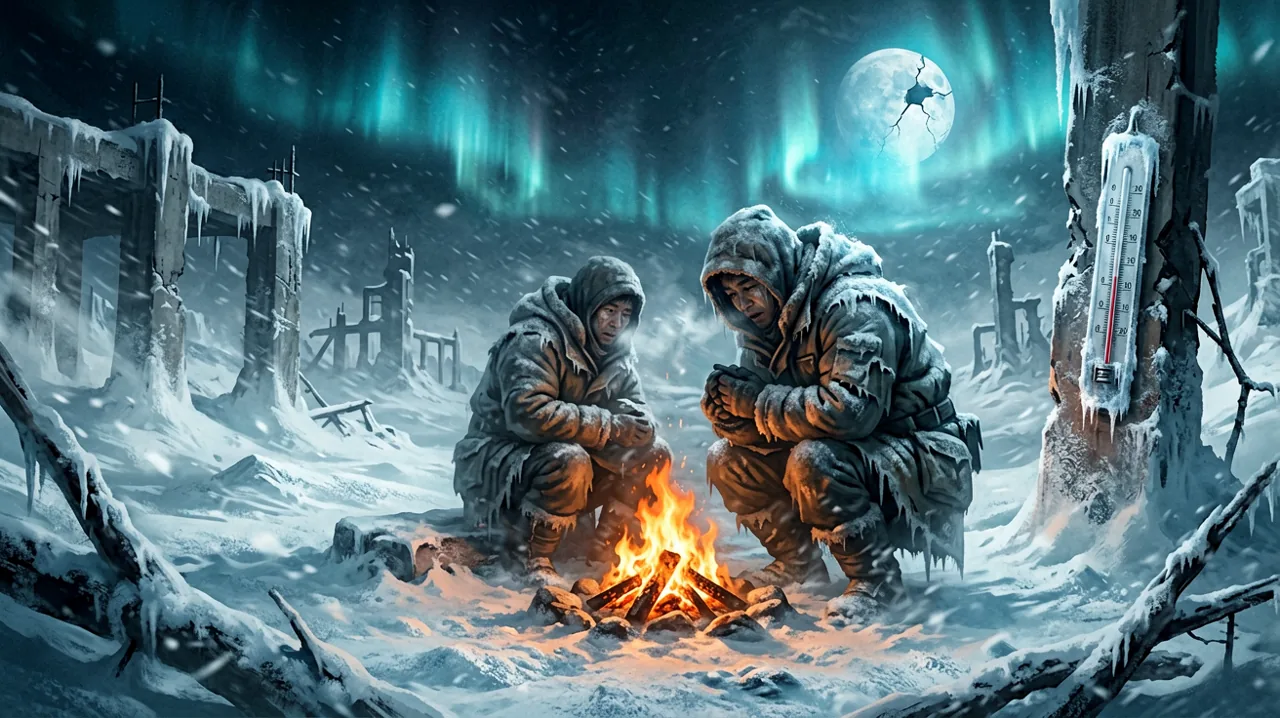
The latest update from SpaceRocket Games has dropped, and it brings a chilling realization to anyone planning to step into the frozen wasteland of Permafrost. In a newly released Deep Dive trailer, producer Miko took center stage to discuss what players will quickly realize is their most relentless and unforgiving adversary: the cold itself. Set in a near-future Earth that has been plunged into an eternal winter following a cataclysmic lunar event known as “The Shattering,” Permafrost flips the script on traditional survival conventions. While finding food, scavenging scrap, and fending off hostile wildlife remain crucial tasks, the immediate, ever-present danger of sub-zero temperatures dictates every single decision you will make. This latest update provides a sobering look at the core gameplay loop, emphasizing that the environment is not merely a static backdrop for your struggle—it is an active, hostile force relentlessly trying to end your journey before it even truly begins.
The Shattering and the Sub-Zero Reality
Before analyzing the intricate mechanics of temperature management, it is vital to understand the context of this frigid apocalypse. “The Shattering” wasn’t just a geological disaster; it fundamentally altered the planet’s climate overnight. The shattered moon hanging ominously in the sky is a constant visual reminder of the day the world froze over. According to the development team, this event created a permanent state of winter where the ambient temperature rarely, if ever, rises above freezing. In many contemporary survival games, severe weather is treated as a temporary inconvenience—a passing rainstorm that obscures vision or a brief heatwave that marginally increases water consumption. In Permafrost, the freezing temperatures are the inescapable baseline reality.
When you step outside your safe zone as the engineer Rook, you are immediately operating on a strict timer. The cold does not wait, and it does not negotiate. It continuously saps your core body heat, forcing you to think tactically about every single excursion. The developers have made it abundantly clear that you cannot simply brute-force your way across the landscape. Every expedition out of your shelter requires meticulous planning. If you wander too far without adequate thermal protection or a reliable, portable heat source, the environment will claim your life far faster than any hungry predator roaming the snowdrifts.
Mechanics of the Cold: Frostbite, Hypothermia, and Survival
The Deep Dive trailer implies a robust, multi-layered temperature system that will challenge both novice players and veteran survivalists alike. Body temperature management is expected to be a highly dynamic mechanic influenced by several overlapping environmental factors, including ambient base temperature, dynamic wind chill, sudden precipitation, and the time of day.
As your core temperature begins to drop, players will likely experience a cascade of debilitating physiological effects. The initial stages of cold exposure might manifest as a significant increase in stamina consumption. Simple, everyday tasks like running over a short distance, swinging a makeshift tool, or trudging through knee-deep snow will suddenly become exhausting ordeals. This initial warning system is your cue to abandon your current task and seek shelter or warmth immediately.
If you choose to ignore these warnings and push further into the icy void, severe hypothermia will inevitably set in. At this critical stage, community reports and genre conventions suggest your vision may begin to blur, your movement speed could dramatically decrease to a crawl, and your fine motor skills—necessary for quick crafting or aiming a weapon under pressure—will degrade substantially. The developers have frequently highlighted the specific threat of frostbite, suggesting that long-term exposure to extreme temperatures could lead to severe health penalties requiring specific, hard-to-find medical supplies to treat. The environment essentially becomes a ticking clock. A sudden, unexpected blizzard can drop the ambient temperature by dozens of degrees in a matter of mere minutes, turning a routine scavenging run for scrap metal into a desperate, chaotic fight for survival.
Crafting Your Defense: Layering and Insulation
Surviving this brutal reality requires intense preparation. You cannot fight the cold with firearms or melee weapons; you must fight it with proper insulation and resource ingenuity. This makes the equipment system in Permafrost incredibly important. Early in your journey, you will likely be relying entirely on scavenged, inadequate clothing—ragged jackets, torn scarves, and whatever thin thermal layers you can pull from abandoned suitcases or derelict vehicles scattered across the ruins. However, these rudimentary garments will only delay the inevitable freezing process.
To truly push back the boundaries of your explorable world and reach higher-tier loot zones, you will need to engage deeply with the game’s tailoring and equipment crafting systems. Hunting the local wildlife will provide essential, life-saving materials like thick furs, heavy leather, and sinew. Crafting high-tier winter gear won’t just be a cosmetic upgrade to make your character look cool; it will be a mathematical necessity to survive the harsher, wind-battered biomes.
Players will need to carefully consider the trade-offs of their equipped gear. A massive, heavy bear-skin coat might offer unparalleled thermal protection against a blizzard, but it could severely restrict your overall mobility, reduce your sprint speed, or drastically lower your stamina regeneration rate. Finding the precise balance of gear for the specific task at hand—whether it is a quick, agile sprint to a nearby loot cache or a slow, heavy, multi-day trek to repair an abandoned facility—will be a core pillar of the Permafrost experience. For more insights on gathering early materials and building your initial inventory, check out our beginner survival guide.
The Hearth in the Wasteland: Building a Shelter Network
No matter how exceptionally well-insulated your clothing is, the biting cold will eventually pierce through your layers. This is precisely where the game’s shelter and construction mechanics become your ultimate lifeline. The Deep Dive trailer reinforces the thematic idea that you are not just surviving from day to day; you are actively attempting to reclaim a fraction of the world from the ice.
Relying on a single, centralized base will not be nearly enough to conquer the expansive open-world map. Players will be tasked with establishing a vast, interconnected network of outposts and shelters. These safe zones can range from rudimentary lean-tos constructed from frozen branches and scavenged tarp—designed purely to block the biting wind and house a small campfire—to fully fortified, insulated structures utilizing salvaged pre-Shattering technology.
Establishing reliable heat sources is your primary objective when claiming a new foothold. A simple wood campfire provides immediate, crucial relief but consumes fuel rapidly and offers virtually no protection from shifting winds if placed outdoors. As you progress through the tech tree, you will need to scavenge for scrap metal and rare components to build cast-iron wood stoves, which are significantly more fuel-efficient, or even repair massive, derelict generators to power electric heaters across a larger, multi-room facility. The architectural integrity of your base also matters immensely. A poorly insulated room with gaping holes in the roof or missing windows will completely fail to trap heat, wasting your precious fuel reserves. Understanding how to properly enclose spaces and upgrade your building materials will be crucial for long-term survival. You can find detailed strategies on optimizing your structures in our comprehensive base building guide.
Exploration Under Pressure and the Role of Your Companion
The oppressive, suffocating nature of the cold transforms exploration into a series of highly calculated risks. You cannot simply wander aimlessly over the next ridge just to see what is there. You must explicitly plan your routes, physically identify potential shelter locations before you desperately need them, and always ensure you are carrying emergency thermal supplies. A sudden whiteout blizzard can disorient you completely, obscuring vital landmarks and dropping the temperature to lethal levels in seconds. In these terrifying moments, panic is your absolute worst enemy.
This is where your loyal dog companion proves to be an invaluable asset rather than just a cute mascot. While the dog can actively assist with carrying extra fuel logs or warning you of approaching hostile wildlife, its innate ability to navigate when human senses fail could easily be the difference between life and death. The companion reportedly might be able to sniff out the nearest heat source or guide you back to your established shelter network when visibility is reduced to absolute zero. Furthermore, utilizing your companion as a pack animal to carry extra firewood, emergency medical supplies, or heavy thermal gear allows you to extend your expeditions slightly further into the unknown without overburdening your own inventory slots.
The Mental Toll of the Long Winter
Beyond the physical gameplay mechanics, the Deep Dive trailer successfully touches upon the heavy atmospheric and psychological weight of the eternal winter. The meticulous sound design—the lonely howling wind, the heavy crunch of snow underfoot, the desperate, fading crackle of a dying fire—creates an incredibly immersive sense of complete isolation. When playing solo, the vast, empty, frozen landscapes constantly emphasize your extreme vulnerability. Even in co-op mode, where up to four players can share the heavy burden of survival, the cold remains an impartial, silent judge, ready to instantly punish any logistical mistake or lapse in judgment. The absolute necessity to constantly communicate with your team about personal fuel levels, individual temperature status, and shelter proximity adds a unique layer of tension rarely seen in the traditional survival genre.
Looking Ahead to Early Access
As SpaceRocket Games and Toplitz Productions continue to heavily polish Permafrost ahead of its highly anticipated Early Access release, this Deep Dive trailer serves as a stark, necessary reminder of what the game is truly about at its core. It is not a traditional power fantasy where you eventually dominate and subjugate the landscape. It is a grounded, grueling, and methodical fight against an elemental force that cannot be shot, reasoned with, or permanently killed. The cold is a complex puzzle that must be solved and managed continuously, day after frozen day.
For players eagerly awaiting the chance to test their mettle against the Shattering’s brutal aftermath, the message from the development team is crystal clear: respect the cold, prepare for the worst, or the frozen earth will gladly consume you. Stay tuned to the Permafrost Wiki for more detailed updates and deep dives as we approach launch, and make sure to thoroughly review our everything we know compilation to ensure you are fully prepared when the eternal winter finally arrives on your screen.